Kataragama Temple
A sacred multi-religious pilgrimage site in southern Sri Lanka, venerated by Buddhists, Hindus, Muslims, and indigenous Vedda communities alike.
Travel Sri Lanka Hub Editorial Team
Local Expert VerifiedSri Lankan Travel Specialists & Local Explorers
Fact-Checked Guarantee: Ticket fees, train timings, and visiting rules are verified with official Sri Lanka tourism authorities and local operators.
Noticed a change? Report an update to help our community keep information 100% accurate.
About Kataragama Temple & Sacred Complex
Nestled on the southern banks of the sacred Menik Ganga in the Monaragala District, Kataragama is one of Sri Lanka’s most spiritually charged and historically significant pilgrimage centers. For centuries, this sacred town has stood as a shining symbol of religious unity, drawing devout Buddhist pilgrims, Hindu devotees, Muslim worshippers, and indigenous Vedda communities into the same hallowed sanctum.
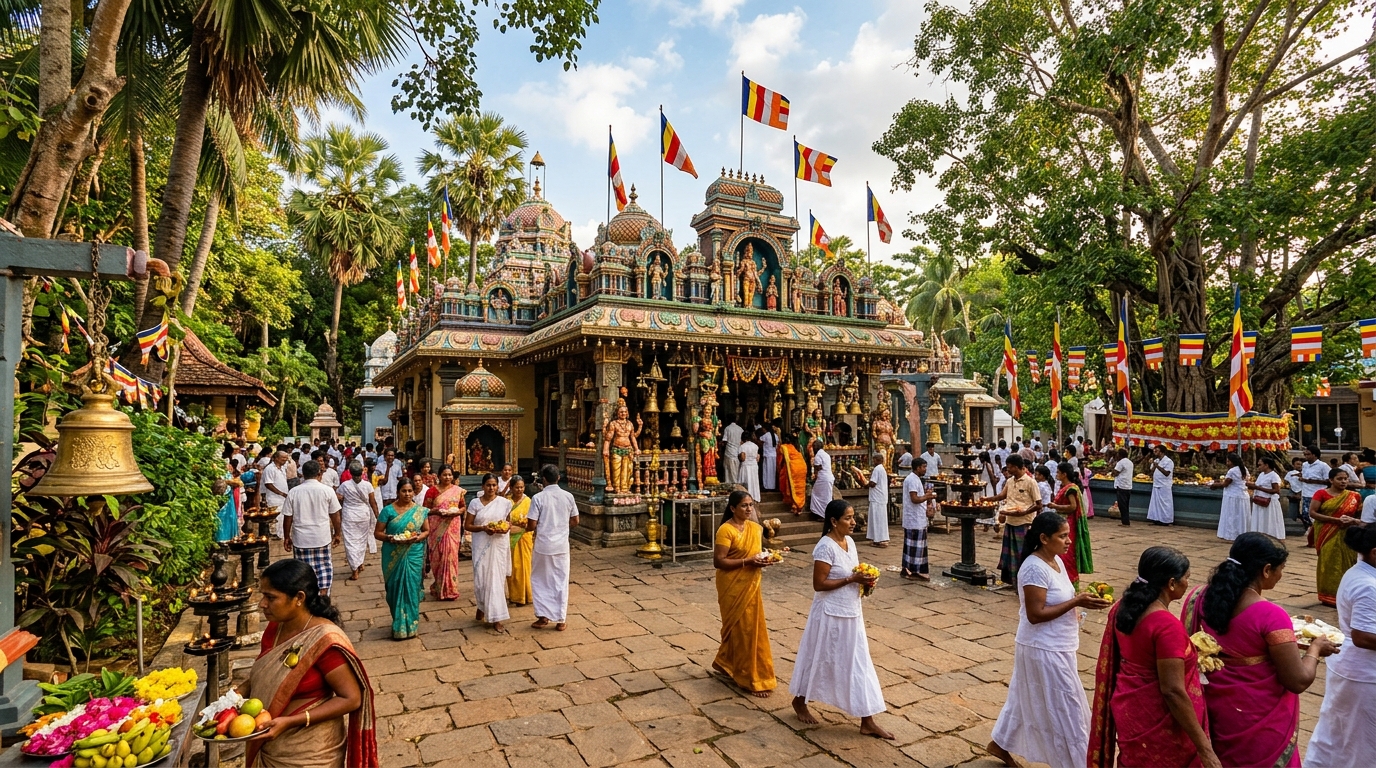
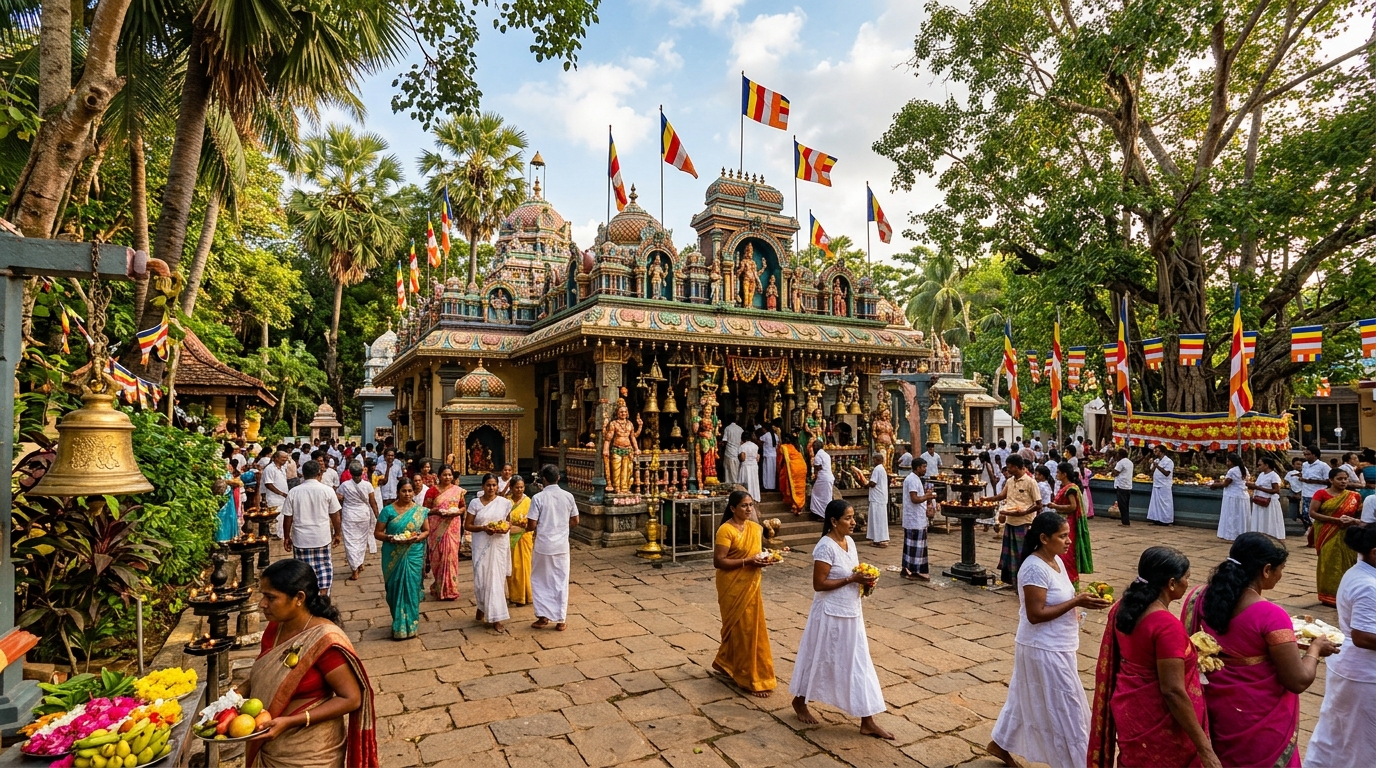
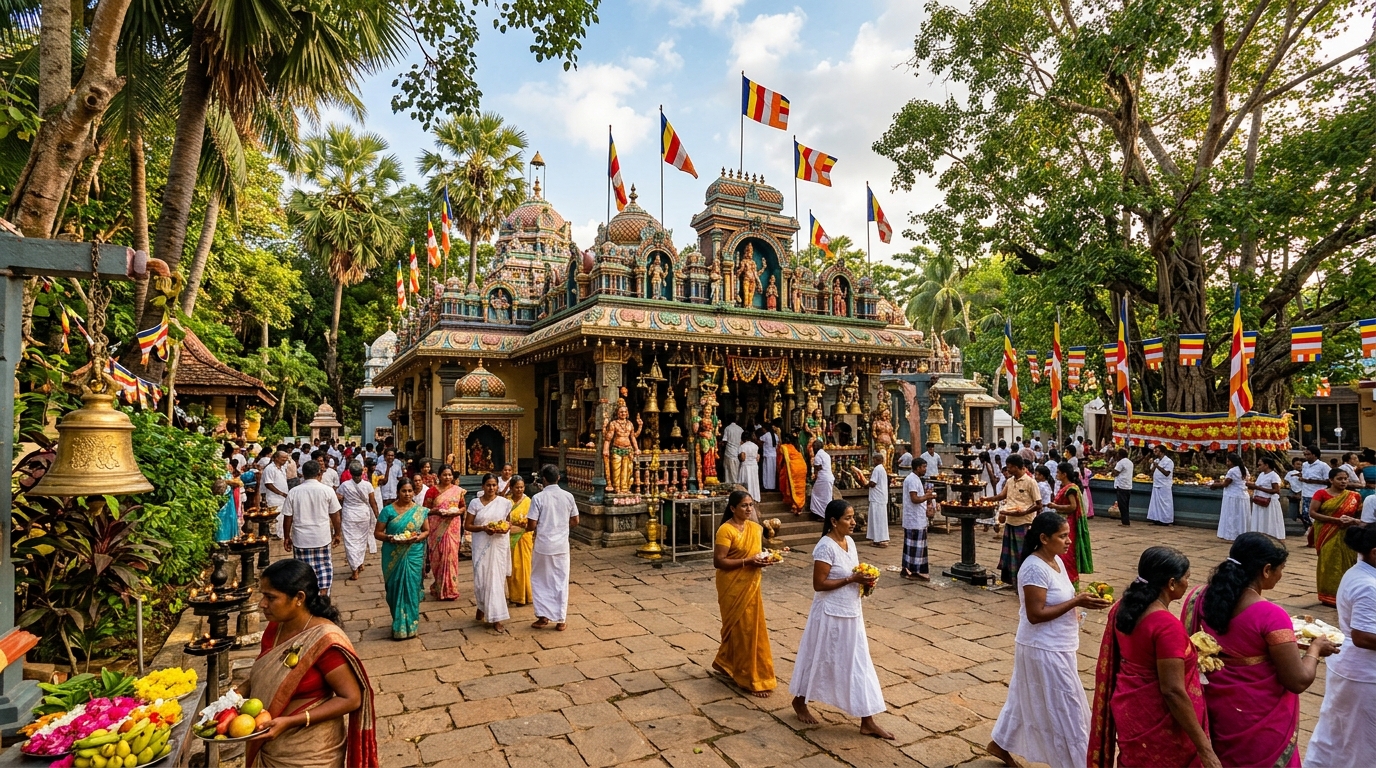
The heart of the pilgrimage town is the Ruhunu Maha Kataragama Devalaya, a shrine complex dedicated to God Katharagama (revered in Hinduism as Lord Murugan, Skanda, or Kartikeya). Unlike ornate South Indian temples, the main sanctum is intentionally modest, veiled by heavy colorful curtains where sacred mysteries and poojas are performed by the hereditary custodians known as Kapuralas.
Just a short walk through the shaded tree-lined avenue lies the revered Kiri Vehera Stupa, built in the 3rd century BC by King Mahasena. According to ancient chronicles, Lord Buddha rested at this exact hilltop during his historic third visit to Sri Lanka, delivering teachings to the local ruler and consecrating the land.
The spiritual journey typically begins at the waters of the Menik Ganga, where pilgrims perform ritual ablutions before entering the devalaya grounds with trays of coconut, betel leaves, and tropical fruits (pooja vattiya). Coconuts are smashed on special stone blocks outside the temple as an act of surrender and prayer for obstacles to be shattered.
Kataragama is also situated right on the doorstep of Yala National Park and Lunugamvehera National Park, allowing visitors to seamlessly blend profound spiritual exploration with world-class Sri Lankan wildlife expeditions.
Key Highlights of Kataragama
Temple Imagery & Architecture